
Attachment Styles - Why Opposites Attract
Being attracted to someone quite different than yourself does not necessarily lead to a dysfunctional relationship. Incompatible attachment styles, on the other hand, can lead to much distress.

Published on September 11, 2017. Updated on August 5, 2022.
The age-old adage ‘opposites attract’ is probably one of the most well-worn and timeless phrases of all time. And like most other time-honored sayings, it has remained so widely popular because… well, it’s true! For whatever reason, many of us find ourselves attracted to individuals who are seemingly polar opposites. If we are highly educated and career-oriented, we may find ourselves attracted to jobless college dropouts. If we are strictly religious and relatively modest, we may find ourselves attracted to a flashy atheist. It just seems to work out that way. In many instances, differences that seem problematic at first end up adding spice and diversity to your romantic relationship. You learn to compromise, and you become a more open-minded and well-rounded individual.
Of course, this is not always the case. In some instances, differences cannot so easily be overcome. It is often true that individuals who crave intimate closeness in romantic relationships are attracted to individuals who prefer distance and complete autonomy. When relationships like this develop, they are – more often than not – doomed to ultimate failure. This incompatibility involves more than a difference in favorite pastimes or belief systems – this difference lies at the very core of each individual, and directly relates to his or her attachment style. The science of attachment defines an individual who exhibits a strong preoccupation with his or her relationships as anxious. Those with anxious attachment styles deeply crave emotional intimacy. Those who wish to reduce intimacy in order to remain independent are defined as avoidant. Avoidant individuals are less aware of the needs of their partner, while anxious individuals are hyper-aware of any perceived threat to their relationship.
Interestingly enough, the attraction between these two intensely opposite individuals is often quite mutual. The anxious individual tends to idolize avoidant tendencies, viewing self-sufficiency and autonomy as attractive qualities – qualities they often wished they possessed themselves. The avoidant believes that he or she is more self-reliant and proficient than others, and the anxious individual only confirms this belief. The avoidant derives great personal pleasure from feeling stronger and more capable than his or her partner. When two such individuals develop a partnership, it almost instantaneously becomes an ongoing power struggle, full of emotional highs and lows. Even if the relationship does last, it will be very draining on both partners.
Once you become aware of your attachment behavior, you become willing to change and shape the way you function within your relationships. Of course, in order for a dysfunctional relationship to begin improving, both parties must heal separately. The majority of research suggest that patterns of attachment remain relatively consistent over time, but many psychological professionals and relationship therapists believe that negative attachment patterns can be interrupted with a lot of personal insight and hard work. Even for those who have an anxious-avoidant attachment style, secure attachments within relationships is possible. Individuals who take the time to reflect on their relationships and develop themselves have the best chance of harmony and functionality in their romantic partnerships.
Further Reading: To learn more about Avoidant Personality Disorder, Click Here.

Penthouse to Basement: The Emotions and Phases Behind Being a Parent of an Adolescent
I am a psychotherapist who specializes and loves working with adolescents and helping parents. Through training and my own personal experiences I am able to share how the phase from dependence to interdependence as a parent can be a bumpy journey, and let you know that you're not alone.

I am a psychotherapist who specializes and loves working with adolescents and helping parents. Through training and my own personal experiences I am able to share how the phase from dependence to interdependence as a parent can be a bumpy journey, and let you know that you're not alone. With humor and a twinge of sadness, I often compare my role as a teenage parent to a slow downward spiral from the penthouse to the basement. Slow being the operative word. It didn't happen overnight. An almost imperceptive descent that occurred over time as my son moved into pre-adolescence and eventually, adolescence. No longer his most significant person and no longer his preeminent love, he is successfully navigating through the 3 broad stages of parent/child development: 1) 0-12 years of age dependence, 2) 12- 24 years of age interdependence and 3) 24 years + launched and independent. These stages are so important to deeply understand and can be really helpful when you're in transition with your child.
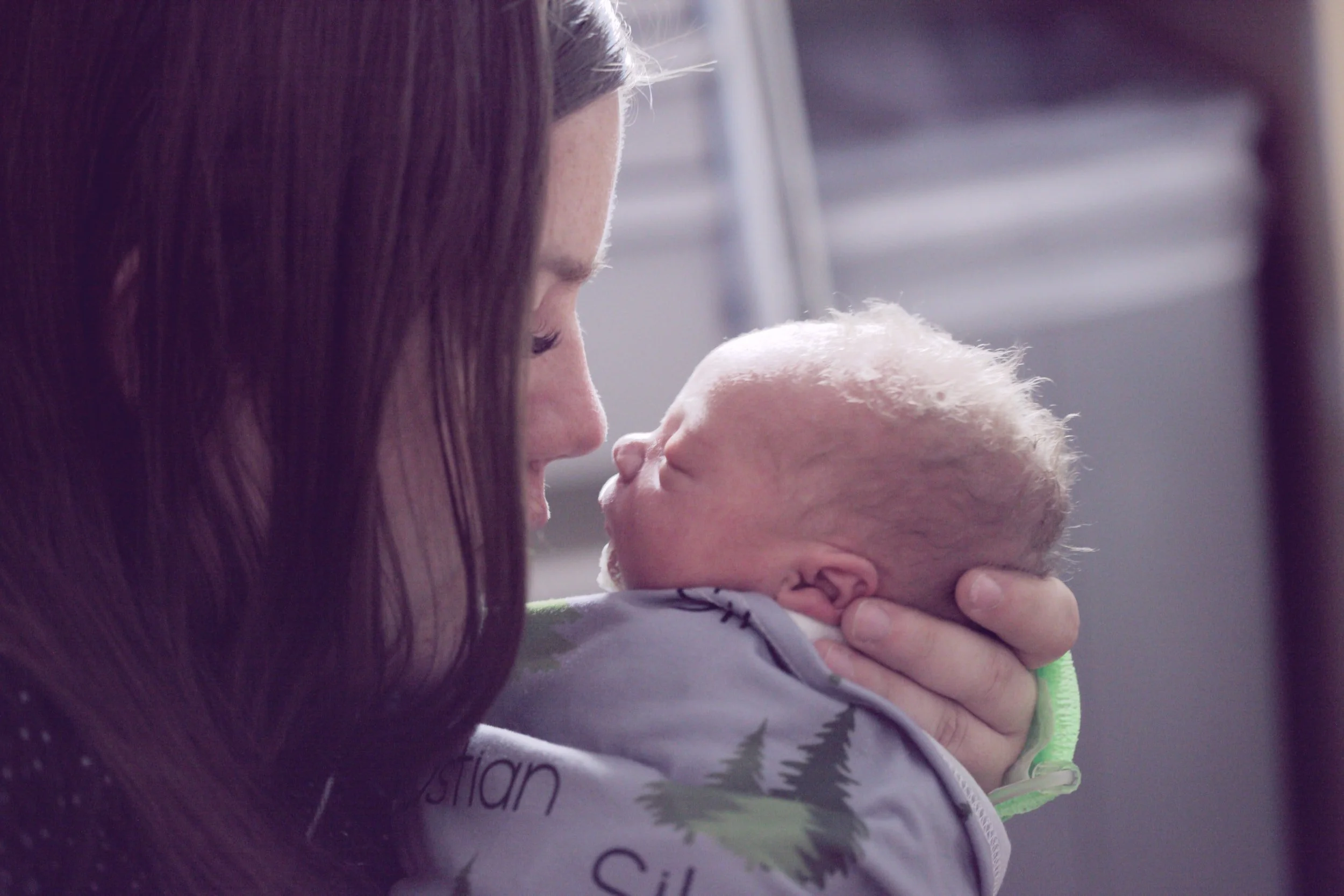
Intellectually, I know the timeline. Emotionally, I know I want the timeline to standstill. Age 0 to approximately 12 years was like a dream. I was the smartest, nicest and coolest Mom. We had a blast. He appreciated my company and looked at me in awe because I seemed to know so much. This is also a very normal part of human development, as mothers or parents we are the center of their world!
As pre-adolescence began to set in, the tide began to turn. I didn't feel so lovable, fun and smart. He was growing up and naturally doing a healthy dance into interdependence, approximately 12-24 years, where his social world shares my center stage - sometimes it takes over the entire stage. Moreover, his cognitive development is moving in new directions, stretching and growing at a swift pace. He has bigger and brighter thoughts accompanied by a healthy sense of autonomy and empowerment. He is finding his own voice, sense of purpose and deeper social connection. He is breaking away. My adoring son is turning into a man.
This new stage, replete with everpresent eye rolls, push back and comments such as, I don't know what I am talking about, sometimes feels devoid of love and affection in my emotional basement. And, while I miss the emotional penthouse that I inhabited during the stage of dependence, I know he is doing his job as it was biologically and socio-emotionally intended. Specifically, our job as parents is not to keep the developmental stage of dependence everlasting. Our job as parents is to make the most of 0-12 creating an emotionally safe place where our children feel seen, soothed and secure under the auspices of unconditional love, validation, boundaries and repair, when rupture occurs, imparting important and effective blueprints, teeming with coping skills, that support a successful launch into subsequent developmental stages.
It follows that I half smile after a predictable eye roll knowing that all as it should be in our relationship. It is no longer all about us. It is about him and the journey ahead of him that I feel privileged to be a part of, and continue to be a part of, albeit in an increasingly supportive role. Importantly, my time in the penthouse rooted him and is the buttress that supports his development into his own, as he, steadily and healthfully, ascends into an independent role as a young man implementing the lessons learned and, unknowingly, leaning on the strength of our relationship developed during the stage of dependence.

I must admit I sometimes, secretly, lay in wait for the successful launch and stage of independence where he is no longer trying to break away. But, for now, the view from the basement never looked so good. In fact as I have learned he is just finding himself in the world and part of the exchanges between him finding himself and my experience is learning to let go on both sides and always knowing I am there for him. This is interdependence at its best and how we build a secure attachment for them when our children are moving towards more independence. It must feel safe for them to spread their wings and we are also there if they need us.
If you are currently raising a child who is morphing into their adolescent years it can be so important to know the developmental stages and what can come up for you as your child learns to have a voice. Or they start to respond differently to you, sometimes learning the phases and seeking support is helpful, you are not alone in this process AND it is totally normal. In order for our children to understand healthy interdependent relationships this transition happens. It can be hard, bumpy and confusing at times but necessary to form separateness that is also safely connected — to redefine boundaries and to learn rupture and repair when moments become harder.
I have learned so much from being a mother and working in my practice with adolescents and their parents that makes me want to share the message that these stages and transitions can feel confusing, perhaps hard at times, but they are so healthy and part of the evolution that allows for continuous expansion and growth.