

Penthouse to Basement: The Emotions and Phases Behind Being a Parent of an Adolescent
I am a psychotherapist who specializes and loves working with adolescents and helping parents. Through training and my own personal experiences I am able to share how the phase from dependence to interdependence as a parent can be a bumpy journey, and let you know that you're not alone.

I am a psychotherapist who specializes and loves working with adolescents and helping parents. Through training and my own personal experiences I am able to share how the phase from dependence to interdependence as a parent can be a bumpy journey, and let you know that you're not alone. With humor and a twinge of sadness, I often compare my role as a teenage parent to a slow downward spiral from the penthouse to the basement. Slow being the operative word. It didn't happen overnight. An almost imperceptive descent that occurred over time as my son moved into pre-adolescence and eventually, adolescence. No longer his most significant person and no longer his preeminent love, he is successfully navigating through the 3 broad stages of parent/child development: 1) 0-12 years of age dependence, 2) 12- 24 years of age interdependence and 3) 24 years + launched and independent. These stages are so important to deeply understand and can be really helpful when you're in transition with your child.
Intellectually, I know the timeline. Emotionally, I know I want the timeline to standstill. Age 0 to approximately 12 years was like a dream. I was the smartest, nicest and coolest Mom. We had a blast. He appreciated my company and looked at me in awe because I seemed to know so much. This is also a very normal part of human development, as mothers or parents we are the center of their world!
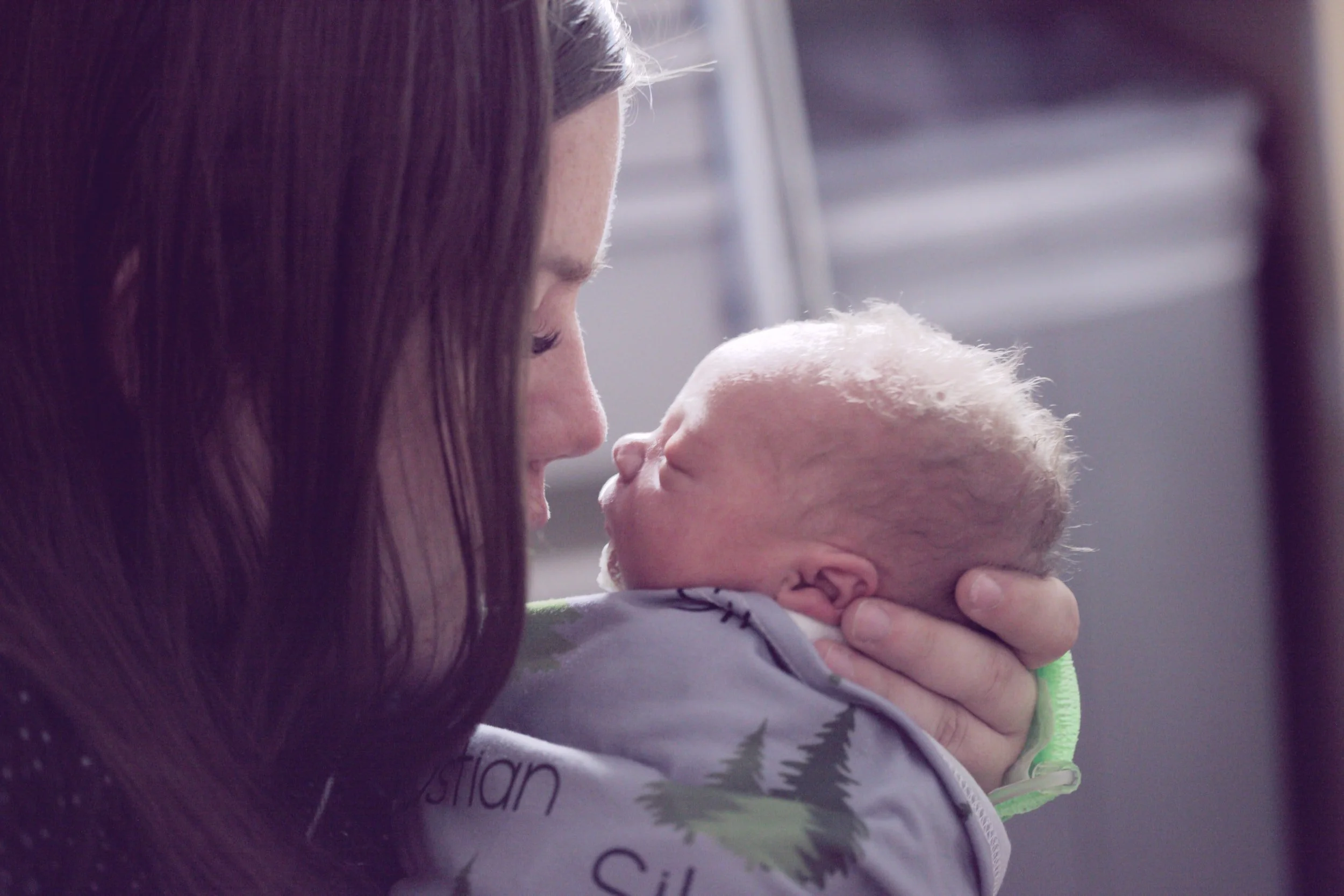
As pre-adolescence began to set in, the tide began to turn. I didn't feel so lovable, fun and smart. He was growing up and naturally doing a healthy dance into interdependence, approximately 12-24 years, where his social world shares my center stage - sometimes it takes over the entire stage. Moreover, his cognitive development is moving in new directions, stretching and growing at a swift pace. He has bigger and brighter thoughts accompanied by a healthy sense of autonomy and empowerment. He is finding his own voice, sense of purpose and deeper social connection. He is breaking away. My adoring son is turning into a man.
This new stage, replete with everpresent eye rolls, push back and comments such as, I don't know what I am talking about, sometimes feels devoid of love and affection in my emotional basement. And, while I miss the emotional penthouse that I inhabited during the stage of dependence, I know he is doing his job as it was biologically and socio-emotionally intended. Specifically, our job as parents is not to keep the developmental stage of dependence everlasting. Our job as parents is to make the most of 0-12 creating an emotionally safe place where our children feel seen, soothed and secure under the auspices of unconditional love, validation, boundaries and repair, when rupture occurs, imparting important and effective blueprints, teeming with coping skills, that support a successful launch into subsequent developmental stages.
It follows that I half smile after a predictable eye roll knowing that all as it should be in our relationship. It is no longer all about us. It is about him and the journey ahead of him that I feel privileged to be a part of, and continue to be a part of, albeit in an increasingly supportive role. Importantly, my time in the penthouse rooted him and is the buttress that supports his development into his own, as he, steadily and healthfully, ascends into an independent role as a young man implementing the lessons learned and, unknowingly, leaning on the strength of our relationship developed during the stage of dependence.

I must admit I sometimes, secretly, lay in wait for the successful launch and stage of independence where he is no longer trying to break away. But, for now, the view from the basement never looked so good. In fact as I have learned he is just finding himself in the world and part of the exchanges between him finding himself and my experience is learning to let go on both sides and always knowing I am there for him. This is interdependence at its best and how we build a secure attachment for them when our children are moving towards more independence. It must feel safe for them to spread their wings and we are also there if they need us.
If you are currently raising a child who is morphing into their adolescent years it can be so important to know the developmental stages and what can come up for you as your child learns to have a voice. Or they start to respond differently to you, sometimes learning the phases and seeking support is helpful, you are not alone in this process AND it is totally normal. In order for our children to understand healthy interdependent relationships this transition happens. It can be hard, bumpy and confusing at times but necessary to form separateness that is also safely connected — to redefine boundaries and to learn rupture and repair when moments become harder.
I have learned so much from being a mother and working in my practice with adolescents and their parents that makes me want to share the message that these stages and transitions can feel confusing, perhaps hard at times, but they are so healthy and part of the evolution that allows for continuous expansion and growth.

3 Ways You May Not Be Trusting Your Partner
Trust in a relationship is allowing yourself to feel vulnerable around your partner. And even though being vulnerable can sometimes mean opening ourselves up to attack, licensed therapist Gwendolyn Nelson-Terry says that "it is necessary [in a relationship] in order to build intimacy with your partner." When you express your trust for your partner, you show them that you believe in their integrity. And in turn, when you are confident that your partner will do right by you, you feel safe around them.

Trust in a relationship is allowing yourself to feel vulnerable around your partner. And even though being vulnerable can sometimes mean opening ourselves up to attack, licensed therapist Gwendolyn Nelson-Terry says that "it is necessary [in a relationship] in order to build intimacy with your partner." When you express your trust for your partner, you show them that you believe in their integrity. And in turn, when you are confident that your partner will do right by you, you feel safe around them.
Consequently, when you don’t trust your partner, you will feel anxious and on edge. When your partner senses that distrust, and feels that it is unwarranted, they may be hurt by your lack of faith in their character, driving a wedge between you.
If you feel that distrust is causing tension in your relationship, here are a few behaviors you should watch out for and what you can do to tackle them.
1. Your jealousy gets out of control
Jealousy is a normal part of any relationship. It’s often a sign that you care about your partner and don’t want to lose them. However, if you find yourself feeling jealous over small actions, then you might need to take a step back. For example, it is not healthy to feel jealous when your partner gets attention on social media, or when they speak to a person of their desired sex. Getting overly jealous might make your partner feel that you don’t trust their ability to be faithful to you. Sometimes, jealousy might even be a sign that you aren’t confident in your own character.
If you find that jealousy is an issue in your relationship, try to assess the root cause of your anxiety.
2. You don’t open up
It’s okay to be reticent about deeper thoughts and feelings while you’re still feeling out a relationship. However, if you’ve been with your partner for a while and you still choose not to confide in them, you keep yourself from forming an authentic bond with them. It also shows your partner that you are afraid of how they might react to your vulnerability. Though it may be difficult, opening up will help your partner better understand your needs, making your relationship stronger in the long run.

3. You don’t forgive small mistakes
When you’re angry, it’s often because you feel you’re not being treated the way you deserve. However, if you’re overly afraid of being hurt or rejected, your anger might become overprotective, causing you to pick fights over small mistakes or lash out before any real transgressions. If you find yourself overreacting over perceived bumps in your relationship, try to look deeper into the problem, and reflect on what it is that is really causing the anger.
Overcoming Trust Issues
Many trust issues are rooted in a fear of getting hurt. The source of this fear varies from person to person. Some people may develop trust issues due to past negative experiences with untrustworthy people, such as abusive parents or partners. Other people may develop trust issues due to low self-esteem, fearing that they aren’t loveable enough for fair treatment.
Developing an awareness of the source of fear can help individuals re-establish trust. If you have this awareness then the next step should be to see a professional. Therapists, mental health counselors, and psychologists will all have an educational background in psychology, and will be able to help you identify the root cause of your trust issues. They're well-trained in the psychology of interpersonal relationships and social science research, allowing them to take into account the many aspects of your life that are preventing you from trusting your partner. As a result, they can prescribe effective strategies for coping with these fears. They may also be able to help you find new ways to foster trust in relationships.
The solution to distrust is connection. Knowing our partners better will help build our confidence in them. If you want to understand your partner on a deeper level, you can consider relationship counseling. When you hone your ability to be communicative and empathetic, you can strengthen trust in your relationship.
Written by Reese Jones
Exclusively for Relationship Institute of Palm Beach