
Balancing Your Brain’s Happy Chemicals: Simple Lifestyle Tweaks for a Better Mood
We all crave happiness, but did you know that your brain’s chemistry plays a big role in how you feel? Your neurotransmitters—like serotonin, dopamine, and oxytocin—are key players in managing your mood, motivation, and overall sense of well-being.

We all crave happiness, but did you know that your brain’s chemistry plays a big role in how you feel? Your neurotransmitters—like serotonin, dopamine, and oxytocin—are key players in managing your mood, motivation, and overall sense of well-being. While it’s tempting to look for quick fixes, the most sustainable way to maintain happiness lies in nurturing your brain’s natural balance.
Let’s explore some lifestyle changes that can naturally boost these feel-good chemicals.
EAT WITH YOUR BRAIN IN MIND
What you eat isn’t just fuel for your body—it’s nourishment for your brain. Foods rich in amino acids, vitamins, and minerals can naturally enhance the production of neurotransmitters. Think of turkey, bananas, and eggs as your serotonin boosters, while almonds and avocados amp up your dopamine. The trick is to enjoy a variety of whole, nutrient-rich foods that give your brain what it needs to thrive. And don’t forget to stay hydrated—water is just as essential for mental clarity as it is for physical health.
MOVE TO ELEVATE YOUR MOOD
Exercise isn’t just about physical fitness; it’s one of the best ways to keep your brain happy. When you move your body, you trigger the release of endorphins—your natural “happy pills.” But that’s not all; exercise also boosts serotonin and dopamine, helping to reduce anxiety and lift your spirits. Whether it’s a morning jog, a dance session in your living room, or a calming yoga flow, find what makes you feel good and stick with it. Your brain—and your mood—will thank you.
SLEEP: YOUR BRAIN’S RESET BUTTON
Sleep isn’t just a break from the day; it’s a crucial time for your brain to reset and recharge. When you don’t get enough quality sleep, your neurotransmitters, especially serotonin, can get out of whack, leading to irritability, anxiety, and even depression. Establishing a soothing bedtime routine, sticking to a regular sleep schedule, and creating a restful sleep environment can make all the difference in how you feel during the day.
EMBRACE MINDFULNESS
Mindfulness isn’t just a buzzword; it’s a powerful tool for keeping your brain’s chemistry in balance. Practices like meditation can actually increase your levels of serotonin and endorphins, helping you stay calm and centered. Whether it’s through deep breathing exercises, mindful walks, or simply taking a moment to pause and breathe, integrating mindfulness into your daily routine can have lasting benefits for your mood and mental clarity.
CONNECT WITH OTHERS
We’re wired for connection, and positive social interactions are essential for a happy brain. Spending time with loved ones, engaging in meaningful conversations, and being part of a community can boost your oxytocin levels—often called the “love hormone.” This not only strengthens your relationships but also enhances your overall sense of well-being. So, make time for those who matter most, and watch how your mood improves.
MANAGE STRESS TO PROTECT YOUR HAPPINESS
Stress is a major mood-killer, and it can deplete your serotonin and dopamine levels if left unchecked. That’s why it’s crucial to find effective ways to manage stress in your life. This might mean setting aside time for relaxation, practicing deep breathing exercises, or indulging in hobbies that bring you joy. Whatever it takes, reducing stress is key to maintaining a balanced and happy brain.
SOAK UP THE SUN FOR A SERATONIN BOOST
Natural sunlight is like a daily dose of happiness for your brain. It helps regulate your circadian rhythm, which in turn affects your serotonin production and sleep quality. Try to spend at least 15-30 minutes outside each day, especially in the morning, to soak up those rays. If you live in a place where sunlight is scarce during certain seasons, consider using a light therapy box to keep your mood steady.
CULTIVATING HAPPINESS FROM WITHIN
Balancing your brain’s neurotransmitters naturally is all about making small, consistent changes that add up over time. By focusing on nourishing your body, moving regularly, getting enough sleep, practicing mindfulness, connecting with others, managing stress, and embracing the sunshine, you can create a happier, more balanced life. Remember, it’s the little things you do every day that make the biggest difference in how you feel.

Penthouse to Basement: The Emotions and Phases Behind Being a Parent of an Adolescent
I am a psychotherapist who specializes and loves working with adolescents and helping parents. Through training and my own personal experiences I am able to share how the phase from dependence to interdependence as a parent can be a bumpy journey, and let you know that you're not alone.

I am a psychotherapist who specializes and loves working with adolescents and helping parents. Through training and my own personal experiences I am able to share how the phase from dependence to interdependence as a parent can be a bumpy journey, and let you know that you're not alone. With humor and a twinge of sadness, I often compare my role as a teenage parent to a slow downward spiral from the penthouse to the basement. Slow being the operative word. It didn't happen overnight. An almost imperceptive descent that occurred over time as my son moved into pre-adolescence and eventually, adolescence. No longer his most significant person and no longer his preeminent love, he is successfully navigating through the 3 broad stages of parent/child development: 1) 0-12 years of age dependence, 2) 12- 24 years of age interdependence and 3) 24 years + launched and independent. These stages are so important to deeply understand and can be really helpful when you're in transition with your child.
Intellectually, I know the timeline. Emotionally, I know I want the timeline to standstill. Age 0 to approximately 12 years was like a dream. I was the smartest, nicest and coolest Mom. We had a blast. He appreciated my company and looked at me in awe because I seemed to know so much. This is also a very normal part of human development, as mothers or parents we are the center of their world!
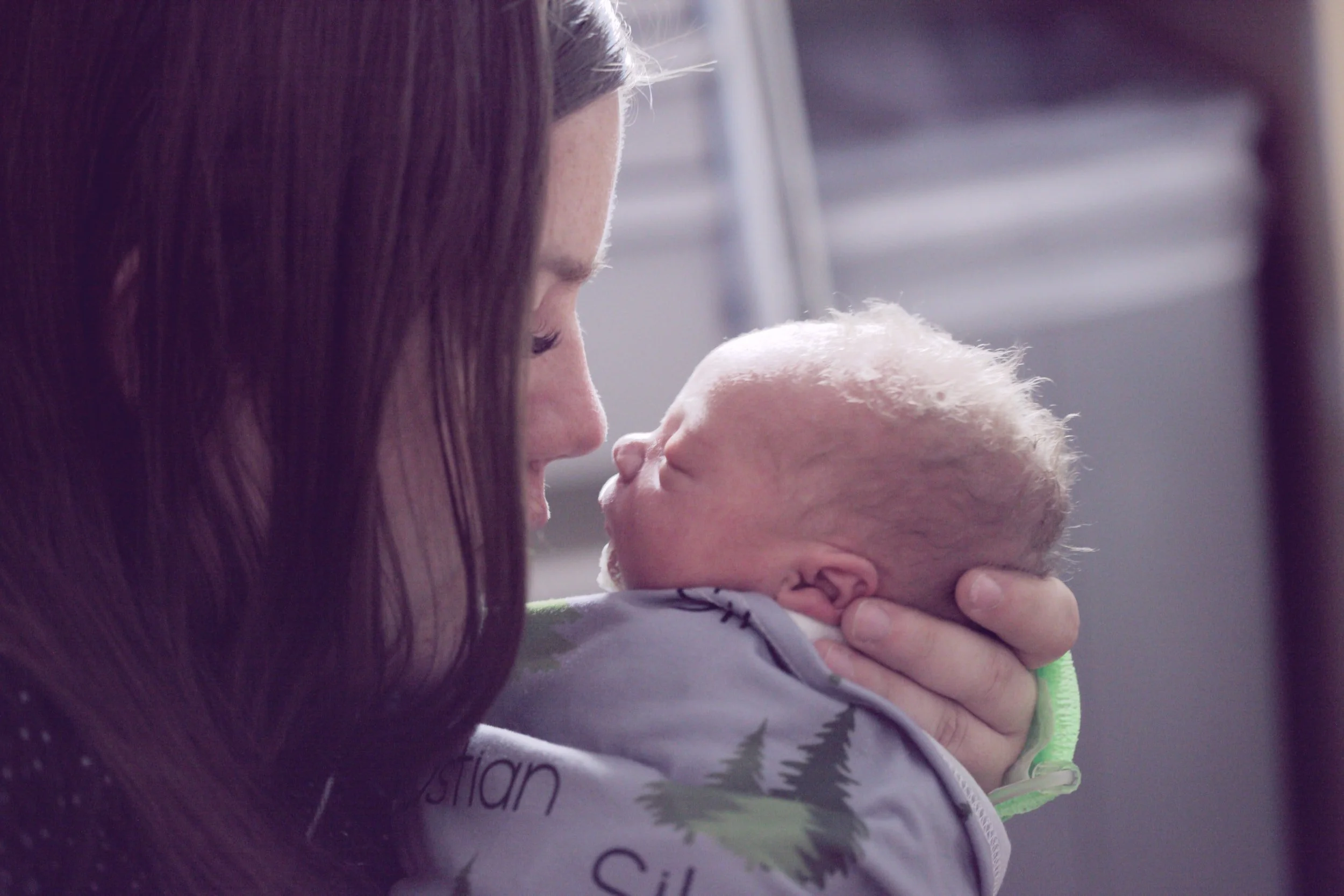
As pre-adolescence began to set in, the tide began to turn. I didn't feel so lovable, fun and smart. He was growing up and naturally doing a healthy dance into interdependence, approximately 12-24 years, where his social world shares my center stage - sometimes it takes over the entire stage. Moreover, his cognitive development is moving in new directions, stretching and growing at a swift pace. He has bigger and brighter thoughts accompanied by a healthy sense of autonomy and empowerment. He is finding his own voice, sense of purpose and deeper social connection. He is breaking away. My adoring son is turning into a man.
This new stage, replete with everpresent eye rolls, push back and comments such as, I don't know what I am talking about, sometimes feels devoid of love and affection in my emotional basement. And, while I miss the emotional penthouse that I inhabited during the stage of dependence, I know he is doing his job as it was biologically and socio-emotionally intended. Specifically, our job as parents is not to keep the developmental stage of dependence everlasting. Our job as parents is to make the most of 0-12 creating an emotionally safe place where our children feel seen, soothed and secure under the auspices of unconditional love, validation, boundaries and repair, when rupture occurs, imparting important and effective blueprints, teeming with coping skills, that support a successful launch into subsequent developmental stages.
It follows that I half smile after a predictable eye roll knowing that all as it should be in our relationship. It is no longer all about us. It is about him and the journey ahead of him that I feel privileged to be a part of, and continue to be a part of, albeit in an increasingly supportive role. Importantly, my time in the penthouse rooted him and is the buttress that supports his development into his own, as he, steadily and healthfully, ascends into an independent role as a young man implementing the lessons learned and, unknowingly, leaning on the strength of our relationship developed during the stage of dependence.

I must admit I sometimes, secretly, lay in wait for the successful launch and stage of independence where he is no longer trying to break away. But, for now, the view from the basement never looked so good. In fact as I have learned he is just finding himself in the world and part of the exchanges between him finding himself and my experience is learning to let go on both sides and always knowing I am there for him. This is interdependence at its best and how we build a secure attachment for them when our children are moving towards more independence. It must feel safe for them to spread their wings and we are also there if they need us.
If you are currently raising a child who is morphing into their adolescent years it can be so important to know the developmental stages and what can come up for you as your child learns to have a voice. Or they start to respond differently to you, sometimes learning the phases and seeking support is helpful, you are not alone in this process AND it is totally normal. In order for our children to understand healthy interdependent relationships this transition happens. It can be hard, bumpy and confusing at times but necessary to form separateness that is also safely connected — to redefine boundaries and to learn rupture and repair when moments become harder.
I have learned so much from being a mother and working in my practice with adolescents and their parents that makes me want to share the message that these stages and transitions can feel confusing, perhaps hard at times, but they are so healthy and part of the evolution that allows for continuous expansion and growth.

2020: The Year of Relationships’ Silver Linings
This year is definitely a year that no one will forget. A year that many years from now will still be talked about as one for the history books.
I know so many tragic events took place in 2020 and will continue as we grapple with Covid. I personally know after losing my grandmother to Covid, how many Americans will have lost someone and 2020 will be marked with that loss forever. Nothing can change that.

This last year is definitely a year that no one will forget. A year that many years from now will still be talked about as one for the history books.
I know so many tragic events took place in 2020 and will continue as we grapple with Covid. I personally know after losing my grandmother to Covid how many Americans will have lost someone, and 2020 will be marked with that loss forever. Nothing can change that.
But when we really zoom out on the whole year, so many amazing things transpired through the hardships we all had to face. Each and every client, friend and family member I know has been challenged in completely different ways unique to them, but there has been a common theme that has been constant throughout. That theme is that 2020 brought to the surface anything that was subconsciously hidden — things you might have been avoiding that pushed you to be uncomfortable enough to consciously create a breakthrough leading to insight which allowed many to harness wisdom that they would have never reached otherwise.
I believe Covid pushed us all differently in many ways. We had to face some realities never thought imaginable. We had to question our safety, stay home, look at our lives and revalue what we think is important. I think all relationships were tested and the ones that were meant to last did — and in fact grew stronger. As we made it through the lock down together, we realized just how valuable we were to each other. We all had to pause and look inward, anything you had been avoiding in your relationship bubbled up to the surface. So much good came from that, and being pushed to be still and present with ourselves for the first time in a long time became the catalyst that was so potent and strong it pushed us into real change.

I experienced many of my single clients struggle as well. A couple of common themes came up. One was that prior to Covid, clients were able to keep their lives so busy with their hobbies and friends that they never really felt too alone. When the pandemic hit and they were stripped from the things that were holding them together, they collapsed.
One of my clients was forced to face her drinking which she was managing (albeit not very well) that finally tipped her over the edge and she decided she had to get sober. Had she not been working from home and not had the opportunity to day drink (not to mention she was extremely smart and high functioning) who knows if she would have ever decided to truly get sober. It had to get bad—she had to feel lost, scared and convinced she needed more help. Covid pushed her. It pushed her to do real work on herself; it pushed her forward and forced her to be so uncomfortable she had no choice but to change. She is sober; she has grown; she has gotten stronger and it was not easy but she is grateful.
Another client was dating frequently prior to Covid, but always pushed her partners away. She would struggle with really getting vulnerable. Often, dating and enjoying others' company, she would occupy her time with dates and keep busy. Covid stopped her dead in her tracks. She really felt her loneliness for the first time. It allowed her to feel such intense uncomfortable feelings that she decided she was ready to do the deeper work on why she kept pushing people away when she got too close.

I remember when I looked into her eyes, she said “Covid has been so hard — I have been so alone, I have been avoiding these feelings of loneliness for so long.” She said this as her eyes widened and tears rolled down her cheek. She was perfectly comfortable with dating and staying busy in her life — but would never get too involved, committed or connected to others. She would run out on her partnerships when things got real and the relationship called for intimacy and vulnerability. Now she had to really look at her behaviors, and I am happy to say that she totally pushed through and worked on her fears. She is now feeling so supported and feels as though she has connected with herself on a much deeper level. Covid helped her to see that the one she was actually running from was her own self, her own internal connection and her own fears. She faced it all — courageously moving through in ways that could not have been done or might have taken years, but with no other options on the table she did the real work.
There have been many silver linings. Many couples that were in fact struggling prior, actually came out stronger. It’s amazing when a crisis hits we tend to come together to survive. I have seen several couples be reminded of the true value of a partnership. The meaning of having someone when the going gets tough. Often our small complaints drop to the wayside as we are forced to be teammates again. Not that those issues go away, but they take on a whole new perspective. I’m sure those old issues will pop up again but when you get through hardships together you're forced to come together and it actually has the potential to make your relationship incredibly strong. One couple realized later in the year that the things that bothered them were more about them accepting each other for more of who they really are. They also communicated in new ways and had to have many deep conversations which pushed them to grow closer in these vulnerable and trying times.

Others have walked away from relationships that were no longer serving them. Instead of staying busy, the issues they were avoiding could no longer hide from what had been lingering. At the end of the day, Covid pushed everyone outside their comfort zone causing them to have to rethink what is actually important — what relationships had the substance to last and what friendships would fall to the wayside because having fun was no longer easy. It was the friendships that continued to support each other emotionally that made it. Covid shed a bright light on what was bonding you with someone else and why. It also made you prioritize what and whom was needed. Often we don’t see crisis as a blessing and we don’t look at these hardships as “good times.” But the insight and wisdom we gain when we are uncomfortable is priceless.
Another one of my clients who had come to Florida to heal and move forward was able to reflect on how much she actually wanted to be around her family. I believe she needed to be away and break free from her toxic marriage. She needed the space and the comfort of the warm Florida sunshine. She grew. She was able to get a lot of space in the last few years. And although she is not going back to her toxic marriage, Covid made her so uncomfortable by not being able to see her children, she was able to reflect and say, “it is time to go back” — not for her relationship — but to be around her children and her new grandchild on the way. We forget that we’ve had the luxury of getting on a plane and flying around, giving us so many options. Without those options, we are reminded again of just who we want to be around and why.

Maybe this year will be a safer year and I know we all can hope for that. But 2020 was a profound year that led to many difficult yet needed changes. Everyone I have helped professionally and people I know personally have been challenged and redirected. Perhaps 2020 turned you 180 degrees in the other direction, and maybe it has been challenging and dark, but more often than not there has been a silver lining in what we have been able to learn individually and grow from.
We’ve had some collective learning as well. When it comes to relationships, Covid has uncovered the hidden, made what we might have been avoiding glaringly obvious and made it visible so we had no other choice but to feel it all.
I hope 2021 is a different year — one we can safely move forward in. I think the insights and growth points of 2020 will always be a reminder of how we had to adapt, shift, change and face whatever came to the surface. Relationships were tested and you were probably tested — being asked to pause in uncomfortable moments and be right where you are, unable to escape your reality with constant busyness. It also made you value the people you care most about in life and let go of others who were no longer needed. There is nothing wrong with letting go of others. Often letting go of people creates more space for yourself and new relationships to enter in due time.

With all the stories above, all these people struggled, but then softened and instead of resisting the struggle or avoiding as they have in the past, they stepped into change and were able to use the hard times in a way to access the ability to transform from their circumstances. Sometimes it takes struggle for us to feel in a way that moves us to create deep changes inside ourselves. We have had to face whatever was waiting below the surface and with great courage I have seen so much change.
I, personally learned to be more grounded in my own home which was actually so important for me. I am constantly attached to my office, but over the summer I took pleasure in being home, being grounded and being okay with not moving around as much. I looked at friendships, letting go of some and calling old ones back that were special to me. Allowing me to see that all friendships have a natural ebb and flow, I said goodbye to my grandma on one of those phone calls you saw on the news. It gave me profound respect for nurses. It shifted my view on what is important and reminded me to show up for those in my family more.
Overall I am sure we have hardships to share from this totally bizarre, uncomfortable and challenging year. I am simply suggesting that many positive changes came from this trying time and to let those lessons be the silver lining of 2020 as we move forward into 2021 — with more wisdom from what we have all walked through together.

5 Signs That You're Codependent
Are you codependent? If you exhibit several or all of the following signs, the chances are good that you struggle with codependent tendencies.

We all struggle with self-esteem from time-to-time. Especially in the age of social media influence, it is all too easy to compare ourselves to others and begin believing that we are falling short. In times like these, it is natural for us to rely on the support of a loved one to pull us out of our slump. Most of the time, however, we are able to pull ourselves out of these slumps. We remind ourselves that we are worthy of happiness; that feelings are not facts, and that we are will feel as good as new in a short matter of hours.
When it comes to codependency, this is far from true. Codependent individuals will entirely lack a stable sense of self-esteem. They will rely on their romantic partner to meet all of their emotional needs, and will derive all of their self-esteem from their current relationship. Additionally, codependent individuals will consistently sacrifice their own needs in order to meet the needs of their partner. It can be difficult to determine whether or not you are struggling with codependent tendencies, seeing as most codependent individuals often believe that they are in healthy relationships. However, if you take an honest and thorough look at the way you act within your relationship, you may find that you feel somewhat trapped. Do you ever resent your partner for expending less emotional energy than you do? Do you feel that you are constantly putting your partner’s needs before your own? Do you feel that you make many sacrifices, and that your partner does not reciprocate?
If so, you may be codependent.
Below are 5 telltale signs that you struggle with codependent tendencies. If you find that the following statements are true for you, seeking professional assistance in overcoming your codependency may be hugely beneficial. Not only so that your romantic relationship can begin to heal – but so that you are able to begin living the fulfilled and contented life that you deserve.
1. You say ‘yes’ all the time, even when you don’t want to.
Codependents tend to have extremely weak boundaries, and have a hard time saying ‘no’ to their significant other. They feel responsible for the well-being of others, and sacrifice their own well-being in the process of people-pleasing.
2. You actively avoid conflict.
Believe it or not, a major component of intimacy is conflict resolution; fighting with your significant other does not mean you do not love one another. The true strength of the relationship lies in how you are able to resolve your disputes. Codependents actively avoid conflict altogether. The may accept the stance of their partner even if they disagree. This often leads to deep-seated resentments.
3. You feel better taking care of others than you do taking care of yourself.
Many codependents will feel guilty for taking time to themselves. Because much of their self-esteem is derived from helping others, they feel better about themselves when they have someone to take care of. Of course, self-care is crucial to every healthy and functional relationship.
4. You suffer from low self-esteem.
Codependents often feel unloved and inadequate, and spend a lot of time comparing themselves to others. Underneath low self-esteem is hidden feelings of shame; many which first developed in early childhood. Perfectionism is also common amongst codependents. If everything is perfect, it is more difficult to feel unworthy. Of course, there is no such thing as the perfect partner – and there is certainly no such thing as the perfect relationship!
5. You have trouble communicating.
Dysfunctional communication is a benchmark sign of codependency. The majority of codependents run into trouble when it comes to communicating their feelings, thoughts, or personal needs. Codependents would rather avoid upsetting their partner than be honest and forthcoming. Manipulation is also common amongst codependents. Communication becomes muddled and dishonest as they attempt to manipulate their partner out of fear.
If you can relate to the above-listed statements, there is a good chance that you are a codependent. What does this mean? In most instances, codependency in adult relationships often stems from dysfunction in childhood. Young children lack the life experience and cognitive ability to recognize that the dysfunctional relationships they are observing are unhealthy; they are incapable of understanding that their parents lack the skills to provide secure attachment. If you struggle with codependency, it is not because you are flawed in any way – you simply need to re-learn how to develop and maintain healthy relationships.
Jessica Baum specializes in codependency in adult relationships, and believes that codependent behavioral patterns can be successfully overcome with intensive therapeutic intervention. Jessica helps codependent individuals to develop an unwavering sense of self-esteem, set and maintain healthy boundaries, and practice self-care.